How does Saxenda work? An explanation of its effects on appetite, satiety, and weight loss | Goodweigh
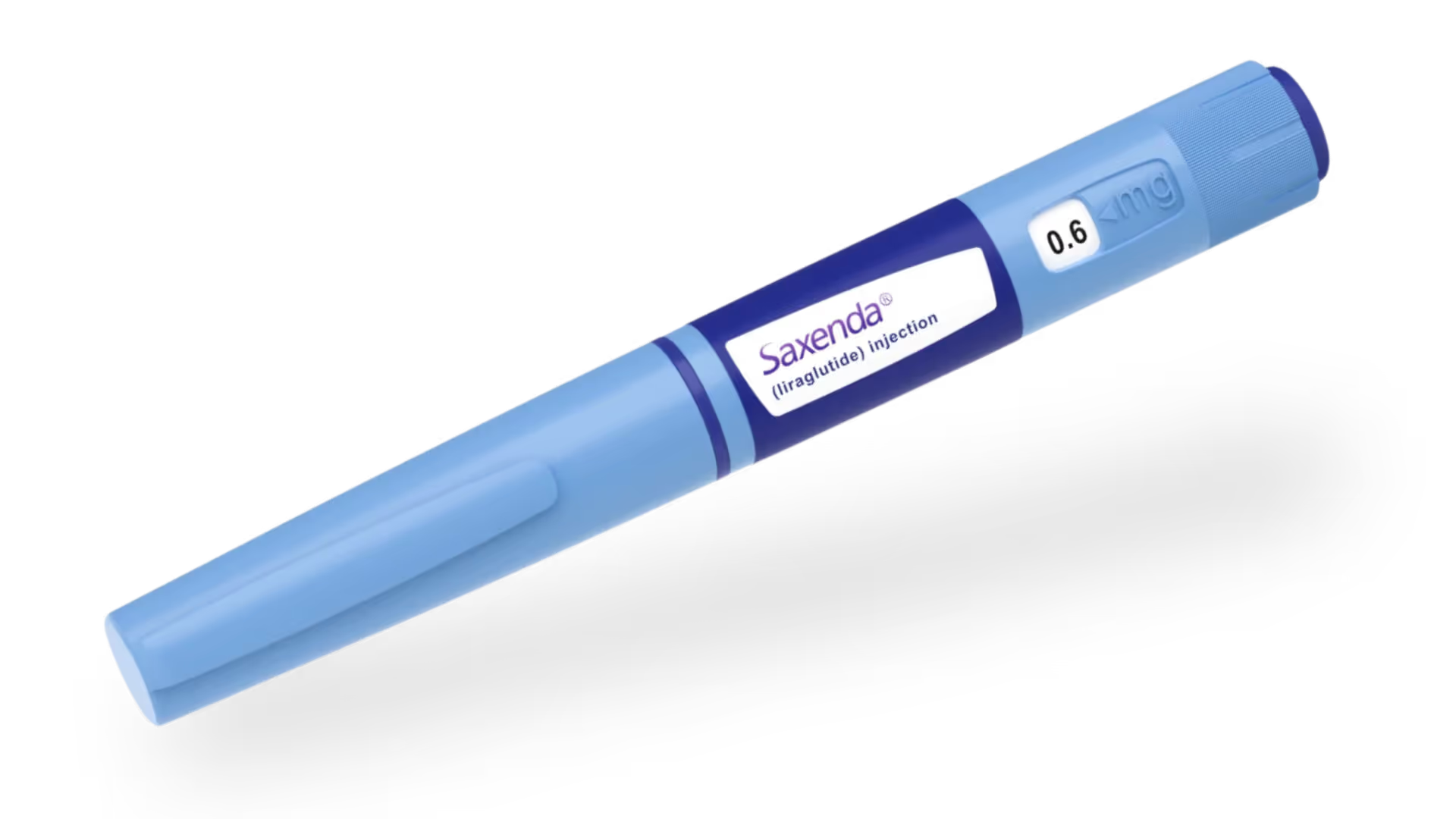
How does Saxenda work?
Saxenda is used to treat overweight and obesity. If people have difficulty losing weight through diet and exercise alone, this medication can help. In such cases, a doctor may prescribe the medication as additional support.
Many users want to know exactly how Saxenda affects the body. Why does it reduce appetite? And how can a single injection affect how much you eat?
The answer lies in how the medication works in conjunction with the body's natural hormonal system. The medication affects signals related to hunger, satiety, and digestion.
This blog explains how this process works. It also covers what you can expect when starting Saxenda and why guidance during its use remains important.
What is the active ingredient in Saxenda?
The active ingredient in Saxenda is liraglutide. It is a substance that strongly resembles a hormone produced by the body itself: GLP-1, or glucagon-like peptide-1.
Normally, this hormone is released after eating. It helps the body transmit signals that food has been consumed. These signals influence several processes, such as blood sugar regulation, feelings of satiety, and the speed of digestion.
Liraglutide mimics this natural hormone. Once the medication is in the body, it can bind to the same receptors as GLP-1. As a result, corresponding signals are activated.
Consequently, the body reacts more strongly to satiety. Many people notice that they feel they have eaten enough sooner than before.
How does Saxenda affect your appetite and satiety?
A large part of Saxenda's effect occurs in the brain. This is where the areas that determine when you are hungry and when you are full are located.
When liraglutide affects these areas, studies show that the body's way of processing hunger signals changes. The feeling of hunger may diminish. At the same time, the signal indicating that you have eaten enough becomes clearer.
This does not mean that your appetite will disappear entirely. However, many users find that they have less need for large portions or snacks and experience less "food noise."
People who suffer from this experience constant and uncontrollable thoughts about food and appetite, even when the body is not feeling true hunger. These obsessive, repetitive thoughts are often driven by psychological factors and can diminish one's quality of life.
For some, eating feels more manageable while using the medication. The urge to constantly reach for food decreases, making it easier to stick to a diet suitable for weight loss.
How does Saxenda affect digestion?
In addition to its effect on the brain, Saxenda also affects the stomach. The medication can slightly slow down gastric emptying after a meal.
As a result, food remains in the digestive tract for longer, which prolongs the feeling of fullness.
Another effect relates to the absorption of nutrients. When food is digested more slowly, energy enters the bloodstream gradually. This can help stabilize blood sugar fluctuations.
For those managing their weight, this can help prevent energy spikes and crashes.
When does Saxenda start to work?
The effect of Saxenda usually develops gradually. During the first few weeks, the dosage is increased in stages. This gives your body time to adjust to the medication.
Some users notice a difference in their appetite quite soon. For others, it takes a little longer for the changes to become apparent.
Weight loss usually does not begin in the first few days. The effect often becomes clearer after a few weeks of use, once the full dose has been reached and the body has adapted.
That is why it is important to give the medication time. Saxenda is intended to support a long-term process.
Is the effect of Saxenda the same for everyone?
Everyone reacts to medication differently, and this applies to Saxenda as well.
Several factors can influence the results. Metabolism is one such factor. Hormones, age, and starting weight can also play a role.
Daily habits also have an impact, such as diet, sleep, and exercise. Ultimately, these factors largely determine how the body responds to changes in appetite.
This is why weight loss progresses faster for some people than for others. The most important thing is that the treatment is tailored to fit your specific personal situation.
What happens when you stop using Saxenda?
When you stop using Saxenda, the effect of the medication gradually leaves your body until your previous balance is restored. The signals that were previously influenced by the medication will once again be fully controlled by your own hormonal system.
According to studies, this may mean that your hunger levels can return to what they were before treatment.
This is why it is important that medication is not the only part of your treatment. New eating habits and lifestyle changes remain essential.
When these changes are properly established during treatment, there is a greater likelihood that the results will be maintained in the long term.
How does Goodweigh support the Saxenda process?
At Goodweigh, medication is always combined with guidance. The goal is not just to help people lose weight, but also to develop habits that can be maintained in the long run.
During the treatment period, we focus on various areas, such as nutrition, lifestyle, and the correct use of medication.
Progress is reviewed regularly, and the plan can be adjusted as needed. This creates an approach that fits each user's personal situation.
How guidance makes a difference
Saxenda can be an effective aid for weight loss. It influences the processes related to hunger, satiety, and digestion.
However, medication is only one part of the whole. To achieve lasting results, it is usually necessary to look at the broader process, which includes good guidance and lifestyle changes.
At Goodweigh, this combination is central. Step by step, we develop an approach that fits your specific goals and situation. Would you like to know how we can help you with this? Fill out our online questionnairetoday.
Viitteet
Berg, S., Stickle, H., Rose, S. J., & Nemec, E. C. (2025). Discontinuation of glucagon-like peptide-1 receptor agonists and body composition: A systematic review and meta-analysis. Obesity Reviews, 26(8), e13929. https://doi.org/10.1111/obr.13929
Ryan, P. M., & Hamilton, J. K. (2022). What do I need to know about liraglutide (Saxenda), a glucagon-like peptide-1 receptor agonist used for weight management in children with obesity? Paediatrics & Child Health, 27(4), 201–202. https://doi.org/10.1093/pch/pxac026